
Sulfur Butterflies
|
|
|
PHOENIX, Az. ----- Rainfall throughout the southwestern United States and northwestern Mexico has been intense and over-abundant in many locations. In response to the explosive growth of vegetation large numbers of yellow butterflies have been migrating north from Sonora and Sinaloa, Mexico, searching for suitable plants upon which to lay their eggs. The most abundant species are the large, clear yellow Cloudless Sulfur, Phoebis sennae and the smaller Sleepy Orange, Abaeis nicippe. Watch for them passing in front of you as you drive about. They are strong fliers, but stop frequently to sip nectar at flowers. Among the plants it finds suitable for egg laying is the Palo Brea, a very popular tree in desert landscaping throughout metro Phoenix. Watch these trees for a few minutes in mid-morning and you will likely see a female Cloudless Sulfur enter and press the tip of its abdomen to a leaf. An egg emerges and sticks to the plant ... it will hatch in a few days to a small larva (a.k.a. caterpillar). Palo Brea, Cercidium praecox, is a native to Sonora and Sinaloa from whence the butterflies have arrived. Desert Senna, Senna covesii, is a native Sonoran Desert plant that these butterflies also use for their caterpillars. 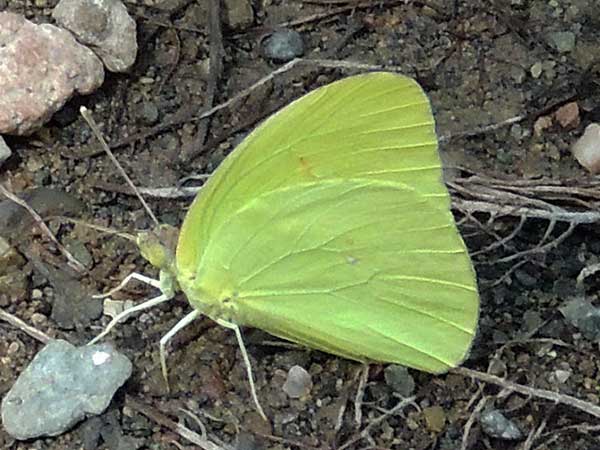
Current Weather Conditions in Phoenix, Arizona, USA, from the National Weather Service |
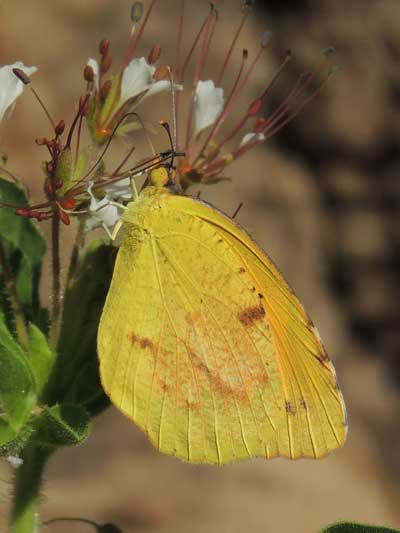
Flower nectar provides vital energy for flight and in return the butterfly can carry pollen for hundreds of kilometers, thereby possibly cross-pollinating a distant plant. |
Back
Issues - Almanac
Sonoran Desert Naturalist Home
Page
Flora and Fauna News, now in its 24th year of publication,
appears several times
per month and provides current information about the birds, insects and plants
(natural history) living in the Arizona Sonoran Desert.
Copyright Michael J. Plagens, 2021.
Send questions or comments to mjplagens@arizonensis.org
The Sonoran Desert Naturalist uses third party advertisements to partly support this educational web site. Some of these advertisers may use technology such as cookies when they advertise here, which will send these advertisers (such as Google through the Google AdSense program) information including your IP address, your ISP, and the browser you used to visit our site. This is generally used for targeting purposes (showing California real estate ads to someone in California, for example) or showing certain ads based on specific sites visited (such as showing travel ads to someone who frequents tourist web pages).