East Mesa, Apache Junction and Superstition Mts.


© MapQuest.com


Peralta Canyon, Superstition Mountains

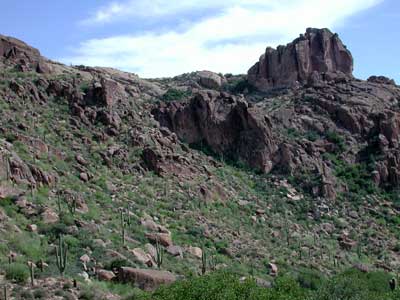
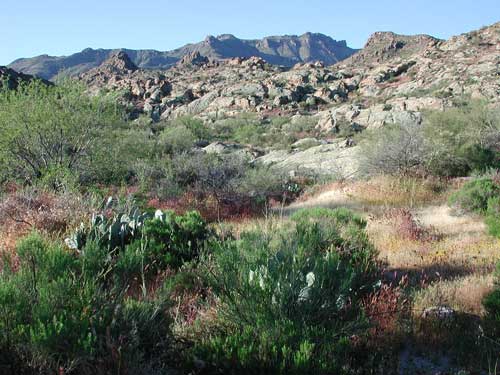
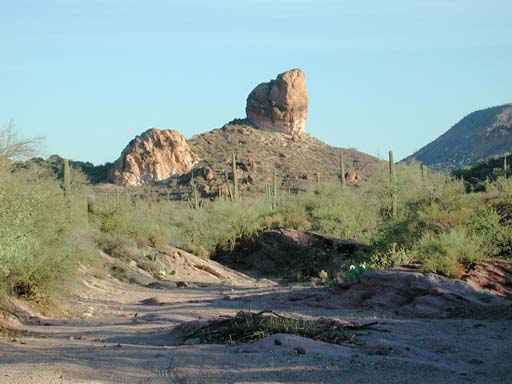
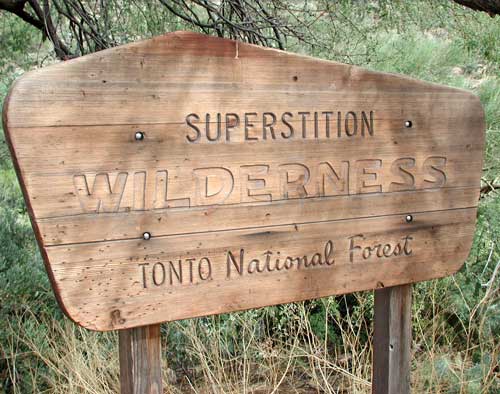
Peralta Canyon provides easy access to the Superstition Wilderness. The turnoff for Peralta is from US 60 about 8 miles east of Apache Junction. The drive in from the highway is exciting ... ahead lie spectacular formations of volcanic cliffs and necks, remnants of the ancient volcanic field that formed the Superstition Mountains some 20 million YBP. All about is a fairy tale land of desert succulents: Saguaros, Chain-fruit (Jumping) Cholla, Engelmann Prickly Pear, Buckhorn Cholla, Hedgehog Cactus, Teddy Bear Cholla, and Ocotillos. On approaching the steep mountainsides, the bajadas present a lush cover of desert shrubs like Foothill Palo Verde, jojoba, and acacias. Bajada is the Spanish name given to the accumulated alluvium at the bases of mountain slopes. Their deep porous nature allows for good moisture penetration and thus larger, more varied plant forms.

(This is all State trust land, right up to the edge of the wilderness. Is it destined to be swallowed up by the advancing urban sprawl with its seas of tract homes, golf courses, exotic vegetation and convenience stores? Let's hope not!)

Field Trip and Wildflower Report from Peralta: September 12, 1999

Fish Creek Topozone.com

I found sixteen kinds of birds during my brief two-hour hike: Gambel's Quail, Northern Cardinal, Cactus Wren, Bell's Vireo, Rock Wren, Canyon Wren, Ladder-backed Woodpecker, Lesser Goldfinch, Scrub Jay, Curve-billed Thrasher, Black-tailed Gnatcatcher, Verdin, Harris Hawk, Turkey Vulture and my favorite for the trip, a pair of very Green-tailed Towhees. Already the Turkey Vultures were finding strong thermals rising off the rapidly heating rock faces. I began sweating almost at once, even though I was still shaded by the steep canyon walls.

But the heat is a good thing. Normally this is a very popular hike, and just finding a parking spot at the trailhead can be difficult ... when the weather is nice. So I endure the heat. The desert is beautiful. There are many butterflies and some wildflowers as well. Thoughts of city and work-a-day are wiped away.

Snout Butterfly

The most abundant butterfly was the Leilia Hackberry Butterfly. These golden brown butterflies alight especially on pebbles and bare spots in the trail, flushing and quickly returning as the hiker passes. About a mile and a half below the trailhead the road crosses a wash (name for a dry-looking desert watercourse). An abundance of subsurface water supports a grove of Seep Baccharis. Standing 4 to 6 feet tall they are topped with clusters of whitish flowers swarming with butterflies! Snout Butterflies (pic above), rich tawny Queens, orange-yellow Sleepy Sulfurs, bright yellow Dogface Butterflies, and Great Purple Hairstreaks among them. Other butterflies seen along the trail were the Gray Hairstreak, Dainty Sulfur, Mexican Sulfur, Aurantiacus Skipperling, and Leda Hairstreak.

Wildflowers were not easily found: The blistering hot days quickly dry up moisture near the soil surface so that annuals just can't grow much. Most flowers were of perennial species, such as the Seep Baccharis. Also at the wash were the first of the fall Alkali Golden Bush. On up the trail the most common flower was that of the twisty Janusia Vine. The flowers are yellow, with five petals. A few purple-rayed, yellow-centered asters and the yellow-flowered Spiny Haplopappus (pictured with the dainty sulfur) were blooming.

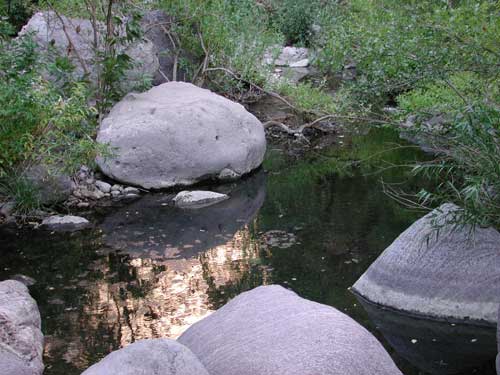
Easily the most fascinating flower was the Snap Dragon Vine - a twiny vine with bright coral pink flowers. Soon the sun was above the canyon wall and beating down on me. Where the trail crosses the creek bed there are massive Sugar Sumacs to provide welcome shade. These magnificent trees have tough shiny leaves about three inches long and exude a pungent resin into the air. The odor seemed a bit like urine to me.

There were an abundance of Dragonflies (such as the Big Red Skimmer) having emerged from the temporary pools that collect in the canyon bottom ... they were more than welcome as there were also some bothersome mosquitoes and eye gnats for them to prey upon. Hopbush was blooming heavily, but the all green flowers would go unnoticed by the casual observer. Other flowers included Four-winged Saltbush, Nightshade, Red Spiderling, Rattlesnake Weed, and Indian Mallow. Several grass species with very attractive inflorescences were also seen along the trail.

After two hours my half-gallon of water was gone and I was soaked with sweat. An invigorating hike and an abundance of desert nature watching made for a perfect start of my Sunday!

Credits: Butterfly Photos Bruce Walsh

Flora Checklist at ASU Herbarium and Southwest Environmental Information Network


Back to Sonoran Desert Naturalist Home Page

Back to Desert Places
Copyright Michael J. Plagens, 1998-2005
Updated 5 May 2005