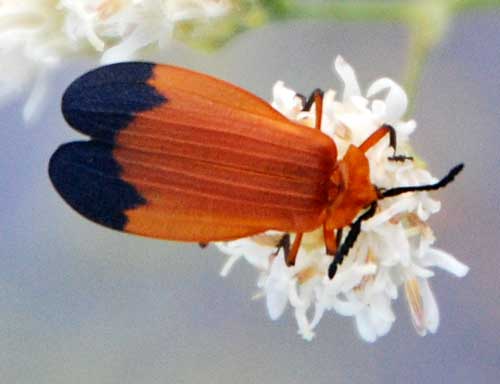
Net-winged Beetle
Lycus sanguineus
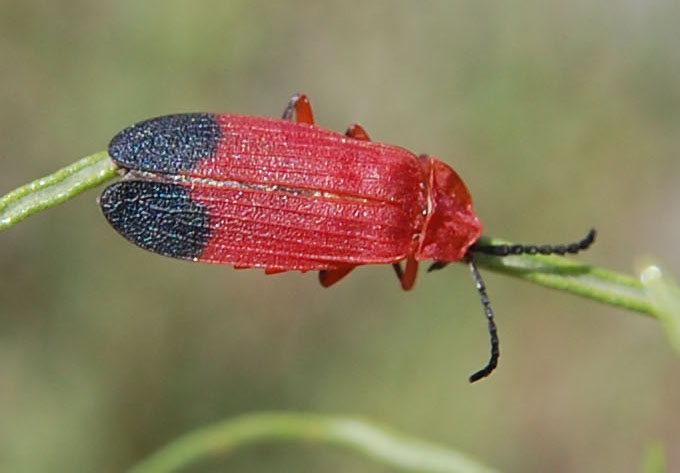
Photographed while on Burro Bush (Hymenoclea salsola) in Rackensack Canyon, Maricopa County, Arizona. August 3, 2008.
Lycidae -- Net-winged Beetle Family
The bright red and black coloration of this insect strongly suggests aposematism. That is the insect has little fear of being predated by a bird or other visual predator because the coloration advertises a noxious biochemical within. When foraging in flowers for nectar or pollen for example they move slowly and do not readily fly.
Jim McClarin found the immature larvae living beneath rocks. Likely they feed on fungi in this habitat (Lawrence, J.F. 1982. Coleoptera. pp. 482-553 In: Parker, S.P. (editor) Synopsis and Classification of Living Organisms, Volume 2. McGraw Hill. New York, NY.).
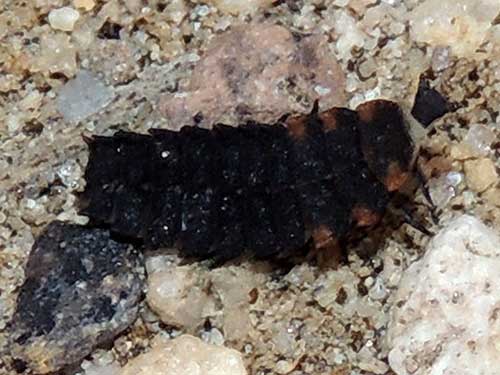
The immature stage of Lycus beetles are active at dusk and dawn and may be found following rainstorms. Flattened in appearance with scale-like margins. Catalina State Park, Arizona. 30 July 2016.